Football belongs to the fans, but who controls the cameras?
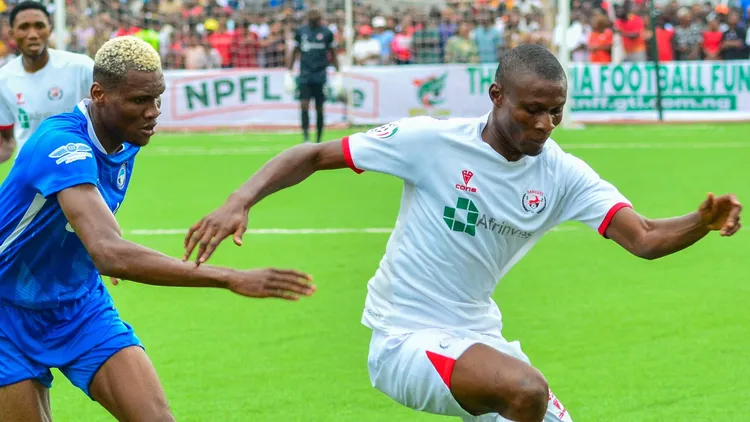
The controversy surrounding Rivers United’s 1–1 draw with Enugu Rangers has sparked an important debate about media freedom, broadcasting rights and the responsibilities of clubs in the Nigeria Premier Football League (NPFL).
What should have been a contest between two of Nigerian football’s prominent sides has become a talking point for a different reason: the disruption of the scheduled live broadcast of the Matchday 11 encounter at the Adokiye Amiesimaka Stadium on November 1.
Murphy Ben International (MBI), the NPFL’s broadcast partner, said its production crew could not cover the match because it was allegedly denied access to the stadium by Rivers United.
The incident prompted the league to take disciplinary action, handing Rivers United a suspended ₦15 million fine, alongside a three point and three goal deduction should the club commit another similar offence during the ongoing season.
But beyond the punishment itself, one important question deserves attention: Does a football club have the right to decide who can cover its matches?
DOES A CLUB HAVE THE RIGHT TO STOP MEDIA COVERAGE?
The answer depends on the type of media coverage involved.
A club generally has a responsibility to manage access to its stadium, enforce accreditation requirements and protect the safety of players, officials, supporters and media personnel.
However, that responsibility does not give a club unlimited authority to prevent journalists from reporting on matters of public interest.
There is an important difference between independent journalists covering a match for editorial purposes and a production company operating under an official league broadcasting agreement.
In the case of Rivers United, the dispute was not simply about an independent journalist being denied an interview or a photographer being prevented from taking pictures. It concerned the access of the NPFL’s authorised broadcast partner, which was expected to provide live coverage of the fixture.
Under Sections B, Rules 6.22 and 6.23 of the NPFL Framework and Rules, the league’s broadcast rights owner is entitled to exclusive and unrestricted access to league venues. Rule 6.23 also provides for financial and sporting sanctions where those rights are obstructed.
This means clubs participating in the competition are expected to respect the league’s broadcasting arrangements.
RIVERS UNITED ALSO HAS A SIDE TO THE STORY
While the NPFL maintained that its broadcast partner was denied access, Rivers United disputed the allegation that it deliberately blocked the production crew.
In a statement signed by the club’s Media Director, Charles Mayuku, Rivers United explained that it acted based on an email received from the NPFL on October 30, which reportedly indicated that the fixture was not included in the official live streaming schedule.
The club also argued that the circulated Matchday 11 broadcast schedule did not identify the Rangers fixture for MBI coverage.
This raises another important issue: communication.
If a club receives an official communication suggesting that its match is not scheduled for live broadcast, it is reasonable to expect that the club will rely on that information.
The NPFL, however, maintained that the match had already been advertised for live coverage and that the broadcast partner was entitled to access.
The disagreement highlights the need for clear, consistent and timely communication between the league, clubs and broadcasting partners.
WAS THE NPFL RIGHT TO PUNISH RIVERS UNITED?
From a regulatory standpoint, the NPFL has grounds to enforce its broadcasting rules.
Broadcasting is not just about putting cameras inside a stadium. It is also part of the commercial structure of modern football. Television and digital coverage help competitions reach wider audiences, attract sponsors, increase visibility and create revenue opportunities.
If clubs are allowed to independently decide whether an authorised broadcast partner can cover their home matches, the league’s broadcasting agreement could become difficult to enforce.
Therefore, the NPFL was within its regulatory authority to investigate the incident and apply its rules if a breach was established.
However, the circumstances surrounding the incident should also matter.
If Rivers United genuinely acted on an official communication from the league, then the NPFL should examine whether its own scheduling and communication processes contributed to the confusion.
Rules must be enforced, but their enforcement should also be fair, transparent and consistent.
WAS THE PUNISHMENT TOO SOFT?
Although the NPFL prescribed a ₦15 million fine and a three-point and three-goal deduction, it suspended the sanctions and issued Rivers United a formal final warning.
The decision has attracted criticism from observers who believe the league missed an opportunity to establish a stronger disciplinary standard.
There are also questions about consistency, particularly when compared with other disciplinary cases involving NPFL clubs.
On November 5, Rivers United confirmed that it would accept the league’s decision without appealing. The club also called for fairer distribution of live broadcast coverage among all participating teams, arguing that selective coverage undermines the development of the competition.
That argument deserves attention. If the league expects clubs to respect broadcasting agreements, it must also ensure that its broadcast partners fulfil their responsibilities and that coverage is distributed fairly.
Accountability should not be a one way street.
THE BIGGER PROBLEM: NIGERIAN FOOTBALL NEEDS BETTER MEDIA RELATIONS
The Rivers United vs Rangers incident should serve as a lesson for everyone involved in Nigerian football.
Clubs need to understand that media coverage is essential to the growth of the league. The NPFL needs to improve communication and demonstrate consistency in applying its regulations. Broadcast partners must also deliver on their commitments.
Most importantly, supporters should not be the ones who suffer when administrative disagreements arise.
Fans want to watch their teams. Journalists want to report on the game. Broadcasters want to deliver the product. These interests should work together, not against one another.
The NPFL was right to protect its broadcasting framework, but the league must also ensure that its rules are applied transparently and that clubs receive clear communication.
Football cannot grow in an environment where the cameras become part of the controversy instead of helping tell the story.
WHAT IS YOUR TAKE?
Was the NPFL right to sanction Rivers United, or should the league first take responsibility for the alleged confusion surrounding the broadcast schedule?
And should clubs have any authority to stop authorised media coverage of their matches?
Let’s hear your opinion.